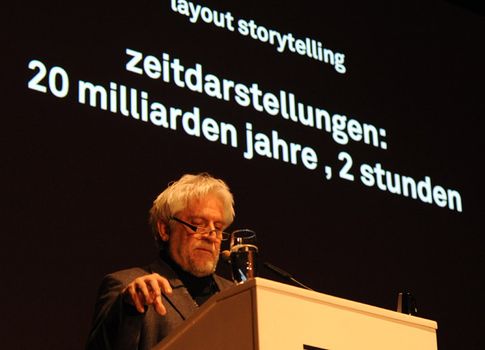
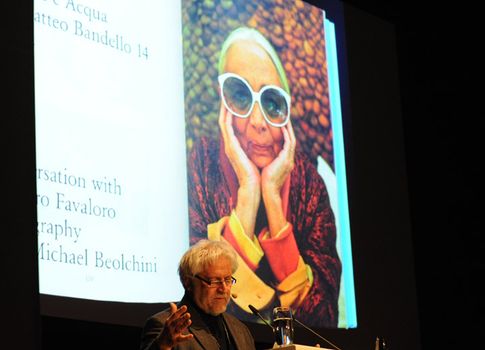
Horst Moser – The grammar of storytelling
Different stylistic devices for telling stories, using either the written or the spoken word, time cast in language and the relationship between movement, pace, thematic range, rhythmical and lingual consistency. All of these are listed by Horst Moser as forming the essential basics of storytelling, initially focussing only on the word. These are a range of tools at one’s disposal, with language paramount. And yet how can one – in the form of language – translate these various stylistic devices and details in editorial design and transport them into a form that constitutes the common grammar of storytelling?
»Zettels Traum« is a work that illustrates the constructive principle of translation into forms: creating fragments of dreams and reality in different crevices in the form of a structure that exists at different levels of consciousness thus providing a design-based translation of content into formal elements. The magazine Alla Carta also follows such a layout structure in its narration of time – an hour of eating together, at breakfast or evening meal. Portraits, insights, details and text constitute a slice of time in an assignment shared by the photographer, text writer and the invited guest. From the sequence and the rhythm of the design comes the impression of time passing which the actual story – the language – dictates.
Standardised layouts are a horror for Horst Moser: »That’s the same as a readymade template«, the designer bemoans. The default form, the rigid design in its inflexibility robs the story of a large part of its narrative potential and overall effect. Even choosing the material for the form the story is to take is for Moser one of the most important aspects of the narrative process: »The Making of« as an example of sounding out the question of images, choosing them and cutting them out, seeking the right approach to cutting and individual aspects. All in all, it is also a process that helps you to find out whether a story is ultimately worth telling and whether the interplay between word and external presentation and form works or not.
Grammar, for Horst Moser, provides one with a useful repertoire: this has less to do with language and more to do with the way in which the story can also be told using visual means. The way the word »grammar« is interpreted here refers to far more than just the sorting of individual aspects that follow a characteristic rhythm thus translating the arcs of tension in language into design and form. It involves to an equal extent the chronological sequencing of images, their arrangement and how they are weighted; it requires one to have an eye for »unimportant details«, to have a feeling for the visual management of contexts, arrangement and dynamics, of perspectives and the authenticity of the images. Just as language is sorted and becomes understandable through grammar, storytelling also has its own grammar that is transmitted through form and visualization. Its potential repertoire is very similar to that of language.
Horst Moser online: www.independent-medien-design.de